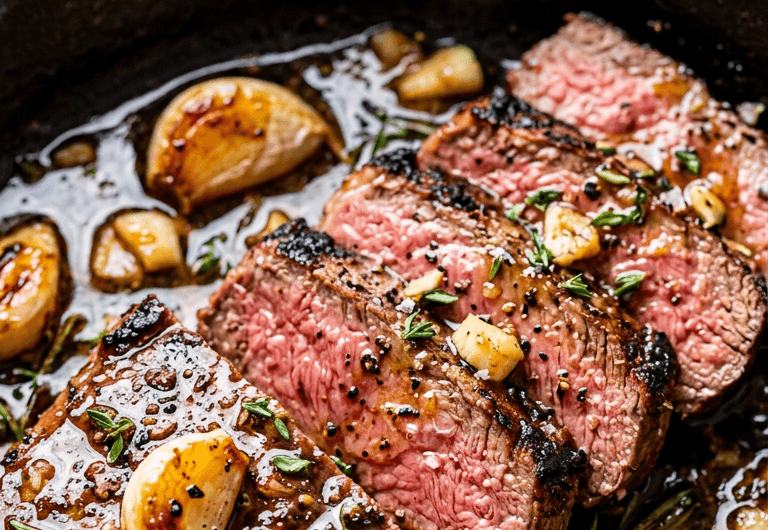
I discovered bavette steak completely by accident at our local farmers market, and honestly, it’s become my go-to cut for weeknight dinners. It’s leaner than ribeye but still has that beautiful marbling and beefy flavor that makes everyone at the table happy. The best part? It cooks in under twenty minutes, which means I can get dinner on the table while Jake handles bath time with the kids.
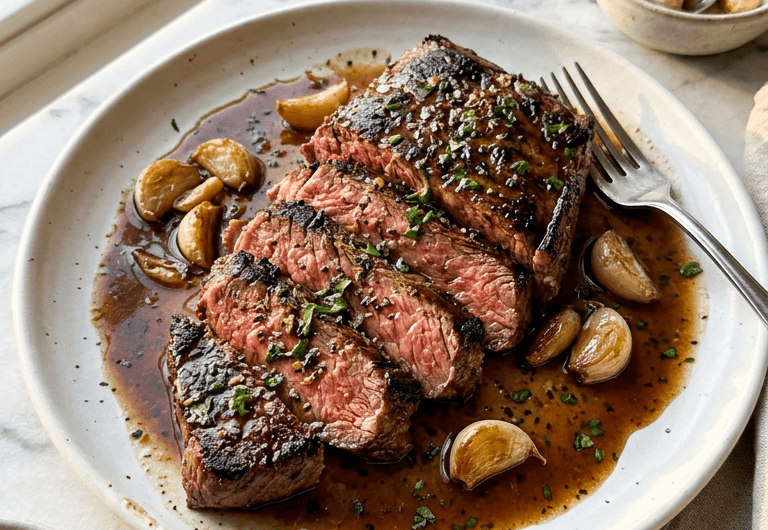
This roasted garlic pan sauce is where the magic happens. I roast whole garlic cloves until they’re soft and caramelized, then build a silky sauce right in the same skillet. The garlic becomes sweet and mellow, not sharp or overwhelming. Paired with a perfectly seared steak, it’s restaurant-quality food that feels completely doable at home.
💌 Love this one? There are 19 more.
I gathered the 20 most beloved recipes on Fresher Recipes into one free printable cookbook. These are the dishes readers tell me changed their weeknights. Pop in your email and it’s yours in seconds.
Instant download. Unsubscribe anytime.
Why You'll Love This Recipe
Ingredients You'll Need
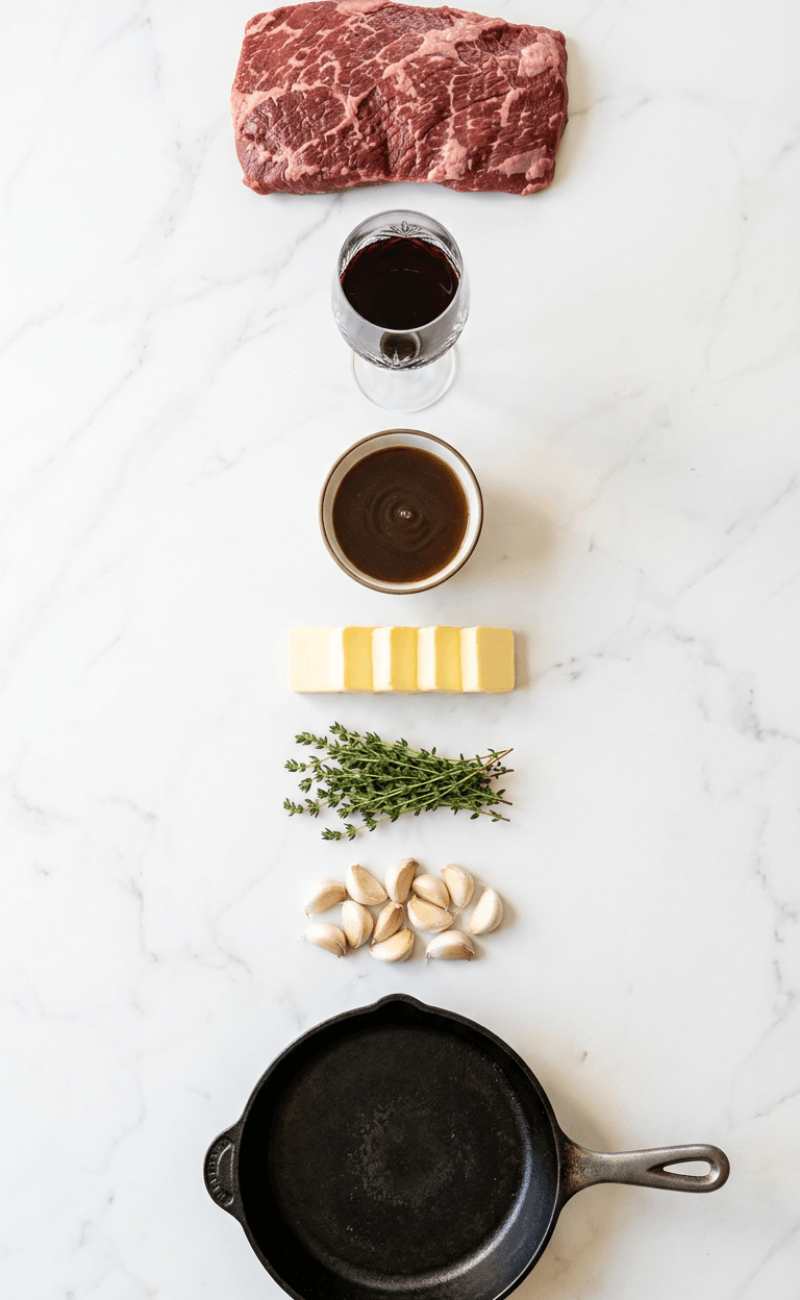
I keep my ingredient list simple so the steak and garlic can really shine. You’ll notice there’s no fancy wine or exotic spices here, just honest ingredients that work together beautifully.
- 2 bavette steaks, 200g (7 oz) each, about 2cm (0.8 inch) thick – Room temperature before cooking gives you an even sear and edge-to-edge doneness.
- 8-10 whole garlic cloves, unpeeled – Roasting whole cloves keeps them creamy and sweet instead of burnt.
- 2 tablespoons unsalted butter, divided – Use real butter here, it makes the sauce silky and luxurious.
- 120ml (1/2 cup) beef or chicken broth – Creates the base of your sauce and keeps everything moist.
- 1 teaspoon fresh thyme leaves – Dried works too, but fresh thyme adds brightness.
- 1/2 teaspoon kosher salt, plus more for finishing – For seasoning both steak and sauce.
- 1/4 teaspoon freshly cracked black pepper – More flavorful than pre-ground.
- 1/2 tablespoon balsamic vinegar, optional but recommended – A tiny splash rounds out the flavors without being noticeable.
Choosing your bavette. Ask your butcher for bavette, not flank or skirt. It’s more tender and cooks faster. If you can’t find it, flank steak works as a backup, just watch the cooking time closely.
If you’re exploring other steak sauces, I love making Garlic Steak Tortellini, which uses a similar garlic-forward approach but in pasta form.
How to Make Bavette Steak & Roasted Garlic Pan Sauce
The magic of this recipe is how fast it moves once you start. Have all your ingredients prepped and ready because the steak cooks quickly and you don’t want to miss any steps.
Step 1: Prepare and season.
Pat your bavette steaks completely dry with paper towels. This is crucial for getting that golden crust. Sprinkle both sides generously with salt and pepper, then let them sit at room temperature for at least 15 minutes. This allows the seasoning to penetrate the meat.
Step 2: Sear the steaks.
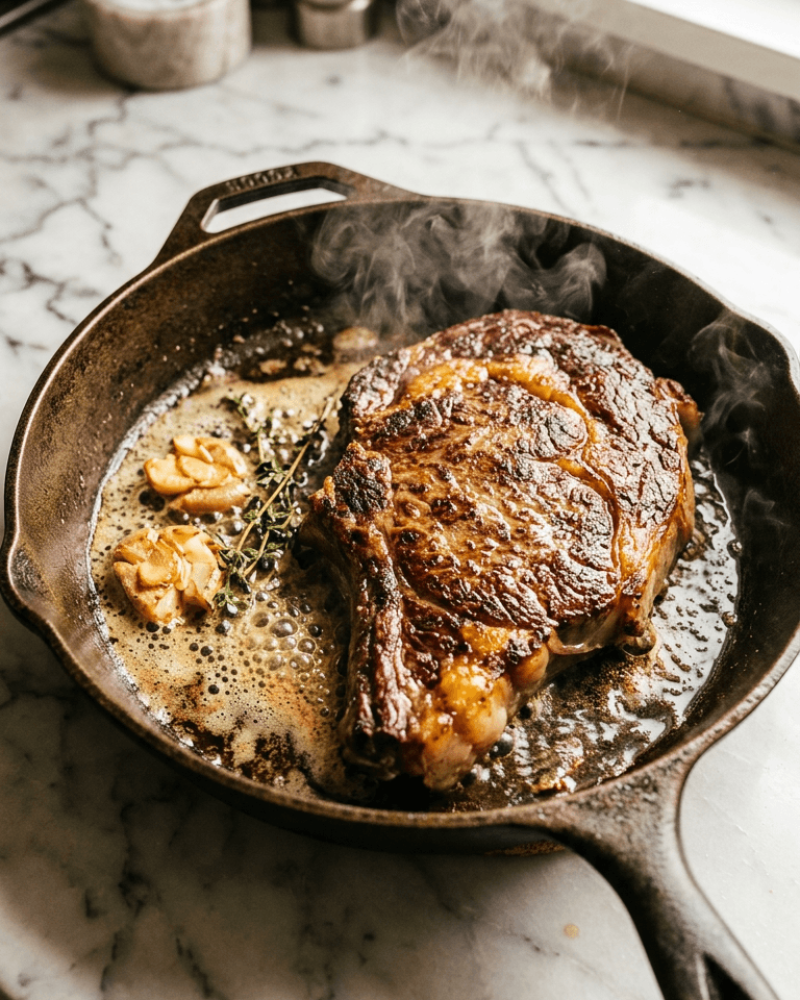
Heat a large cast iron skillet or heavy-bottomed pan over medium-high heat until it’s smoking slightly, about 2 minutes. Add 1 tablespoon of butter and immediately place both steaks in the pan. Listen for that sizzle, it means everything is working. Don’t move them for 4 minutes. Flip and cook another 3-4 minutes for medium-rare (internal temperature around 130-135°C or 265-275°F). The steaks will continue cooking slightly as they rest.
Lora’s Tip: If your steaks are very thick (over 2cm or 1 inch), you can finish them in a 200°C (400°F) oven for 3-4 minutes while you make the sauce.
Step 3: Rest the steaks and start the sauce.
Transfer your cooked steaks to a warm plate and tent them loosely with foil. Pour off most of the fat from the pan, leaving just a thin layer. Add the whole garlic cloves to the hot pan and let them roll around for 2-3 minutes, shaking occasionally, until they begin to turn golden and smell absolutely incredible.
Step 4: Build the sauce.
Add the remaining 1 tablespoon of butter to the pan with the garlic. Once it foams, add your broth and thyme. Scrape up all those browned bits stuck to the bottom of the pan, those are liquid gold flavor-wise. Let everything simmer for 3-4 minutes until the liquid reduces by about half and tastes concentrated and rich. Stir in the balsamic vinegar if using.
Lora’s Tip: For a thicker sauce, whisk 1 teaspoon of cornstarch with 1 tablespoon of cold water and stir it in during the last minute of cooking. But honestly, I love this sauce as is.
Step 5: Finish and serve.
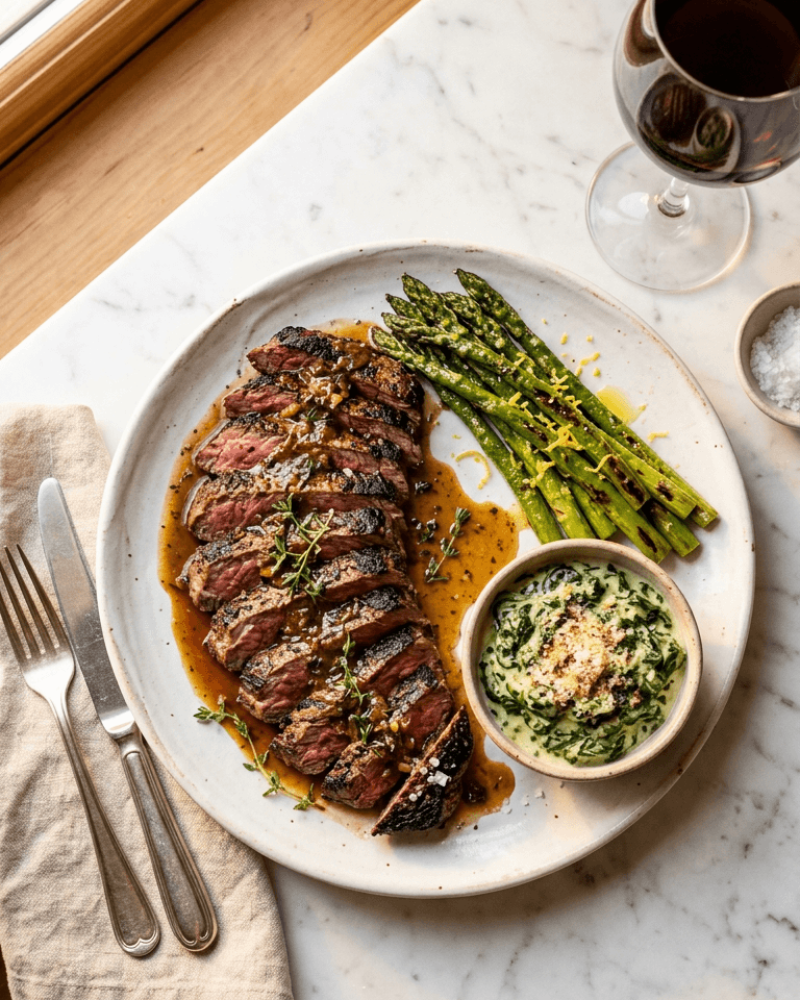
Taste your sauce and adjust salt and pepper as needed. I usually add a pinch more salt since the reduction concentrates all the flavors. Spoon the roasted garlic cloves and sauce over your rested steaks. The roasted garlic is soft enough to squeeze out of its skin right onto your plate. Serve immediately with your favorite sides. This pairs beautifully with roasted vegetables or One Pot Creamy Garlic Pasta for a complete meal.
Variations and Substitutions
Once you master the basic method, you can play with different flavor profiles depending on what you have on hand or what you’re in the mood for.
Red wine reduction: Replace the broth with 120ml (1/2 cup) of red wine. Let it reduce by half before adding the butter. This creates a deeper, more wine-forward sauce that pairs beautifully with steak.
Mushroom version: Slice 150g (5 oz) of mushrooms and sauté them in the pan along with the garlic. The earthiness complements the steak perfectly. Cook them until golden before adding broth.
Herb-forward: Add fresh rosemary or sage along with the thyme. Woody herbs really shine when infused into a warm sauce.
Spicy kick: Add 1/4 teaspoon of red pepper flakes or a dash of hot sauce to the finished sauce. The heat cuts through the richness beautifully.
What to Serve with Bavette Steak & Roasted Garlic Pan Sauce
I never serve steak with anything too heavy. You want sides that complement rather than compete with that beautiful meat.
Roasted vegetables: Asparagus, green beans, or Brussels sprouts roasted in olive oil and salt. The slight char on them echoes the seared crust on your steak.
Something creamy: If you want to go fancier, Creamy White Chicken Chili style sides or mashed potatoes would work, though they’re richer. I usually keep it lighter.
Bright greens: A simple arugula salad with lemon vinaigrette cuts through the richness of the sauce perfectly. The peppery greens and bright citrus feel fresh against the savory steak.
Bread for sauce: Honestly, get some good crusty bread. That garlic pan sauce is too good to leave on the plate. Lily and Noah fight over who gets to soak up more with their bread.
Storage, Freezing, and Reheating
Frequently Asked Questions
Here are the questions I get asked most about this recipe:
Can I use a different cut of steak?
Absolutely. Flank, skirt, or even flat iron work well with this sauce. The cooking time might vary slightly depending on thickness, so watch your internal temperature. Rib-eye or strip steak will be richer and more forgiving if you overcook slightly, but they’ll also be pricier.
What if I don't have fresh thyme?
Dried thyme works fine, use about 1/4 teaspoon. You could also use rosemary, oregano, or even a pinch of Italian seasoning. The sauce works because of the roasted garlic and butter, the herbs are just adding depth.
How do I know when the steak is done without a thermometer?
The touch method works well once you have practice. Rare feels like the fleshy part of your palm below your thumb when relaxed. Medium-rare feels like that same area when you touch your thumb to your middle finger. Medium feels like touching thumb to ring finger. With a 2cm (0.8 inch) steak cooked my way, 3-4 minutes per side should hit medium-rare.
Can I make this sauce ahead of time?
Yes, you can roast the garlic and make the sauce up to a day ahead. Store it in the fridge and gently reheat before serving. The flavors actually meld nicely overnight. Just reheat gently on the stovetop and add the finishing butter right before serving.
Why is my steak tough?
Usually it’s one of three things: the steak was cooked too long (use that thermometer), it wasn’t rested after cooking (resting is mandatory), or the steak was crowded in the pan so it steamed instead of seared. High initial heat and plenty of space in the pan are your friends.
This recipe has become Jake’s favorite weeknight dinner request, and honestly, I love that something so restaurant-quality takes less time than a drive-through would. There’s something really satisfying about putting a beautiful steak with a silky sauce in front of your family and knowing you made it happen in your own kitchen.
I really hope this becomes your favorite too. The roasted garlic sauce is pure comfort in a pan.
With love and butter,
Lora x