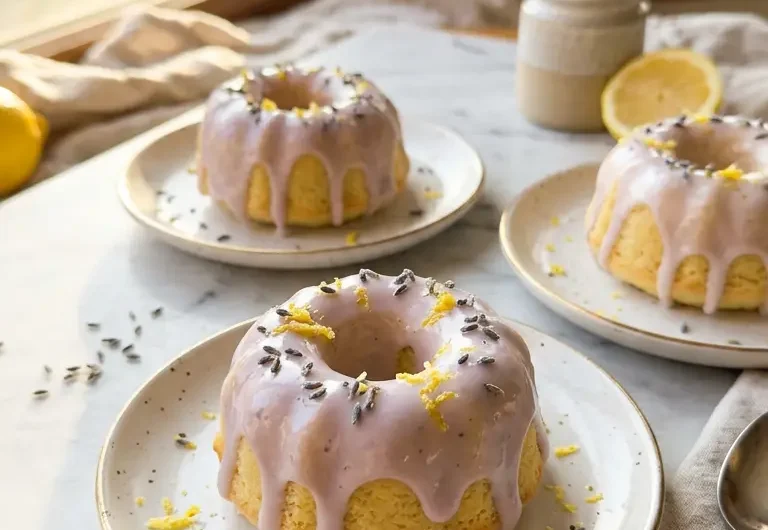
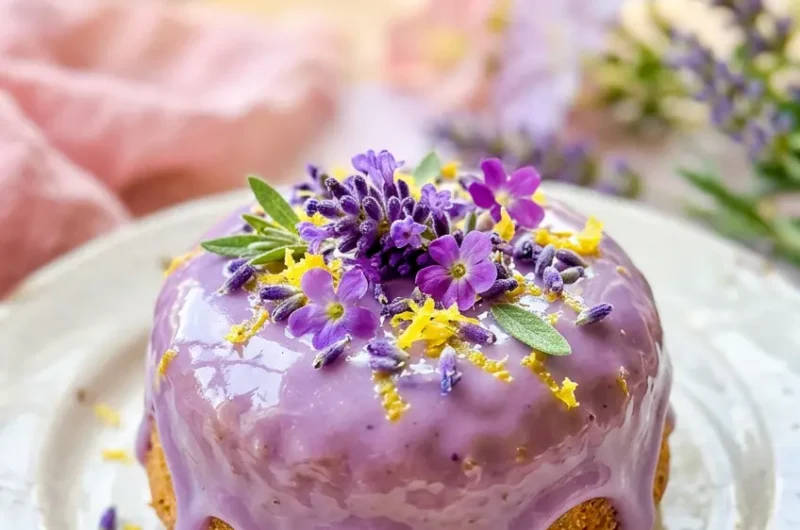
I discovered these mini lemon cakes with lavender glaze by accident when I was trying to impress Jake’s parents at a brunch and realized I’d made way too much batter. Instead of stressing, I grabbed my mini cake pans and created something that felt genuinely special, but actually quite simple. The result? These tender little cakes that taste like sunshine and smell like a lavender field in Provence.
What I love most is how they look on the plate, but how easy they actually are to make. The bright lemon flavor cuts through the delicate lavender glaze, creating this balance that feels fancy without the fussiness. Lily always asks for these at her birthday gatherings, and even Noah will stop his usual chaos to eat one slowly and deliberately.
💌 Love this one? There are 19 more.
I gathered the 20 most beloved recipes on Fresher Recipes into one free printable cookbook. These are the dishes readers tell me changed their weeknights. Pop in your email and it’s yours in seconds.
Instant download. Unsubscribe anytime.
Why You'll Love This Recipe
Ingredients You'll Need
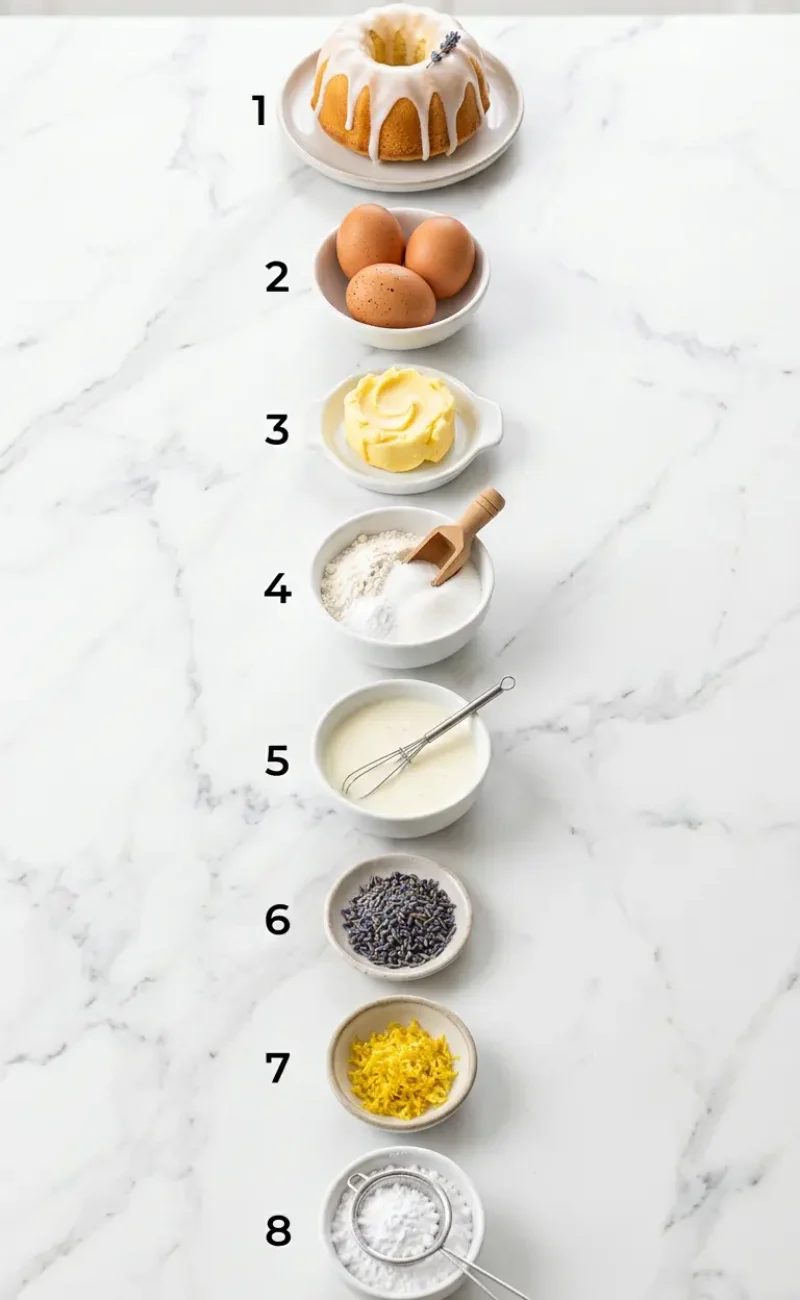
I keep the ingredient list intentionally simple so the lemon and lavender can really shine. You’ll need basic pantry staples, fresh lemon zest (this is non-negotiable), and culinary-grade lavender which you can find at specialty stores or online. The sour cream and milk in the batter create an incredibly tender crumb that stays moist for days.
- 1 1/3 cups all-purpose flour (170g), the foundation for a tender crumb.
- 1/2 teaspoon kosher salt (3g), brightens the lemon flavor and balances sweetness.
- 1/8 teaspoon baking soda (1g), helps the cakes rise evenly and creates a delicate texture.
- 1/2 cup unsalted butter, softened (115g), brings richness and helps create that moist interior.
- 2/3 cup granulated sugar (130g), sweetens the batter and contributes to the tender crumb.
- 1/3 cup packed light brown sugar (75g), adds moisture and subtle depth compared to white sugar alone.
- 1 tablespoon grated lemon zest (from 2 lemons), the star ingredient; use fresh lemons, never bottled juice.
- 2 large eggs, at room temperature, room temperature eggs emulsify better and create a smoother batter.
- 1/4 cup sour cream, at room temperature (60ml), adds tang and moisture without making cakes dense.
- 1/4 cup whole milk, at room temperature (60ml), keeps the crumb tender and delicate.
- 1 teaspoon vanilla extract (5ml), rounds out the flavor without overpowering the lemon.
- 1/4 cup whole milk (60ml), for the lavender glaze, use the same temperature milk as the batter.
- 1/2 teaspoon culinary lavender (1g), must be food-grade; steep this gently to avoid bitterness.
- 1 1/2 cups powdered sugar (175g), creates a smooth, glossy glaze.
- 1/4 teaspoon kosher salt (2g), cuts the sweetness of the glaze slightly.
- 1/8 teaspoon vanilla extract (0.5ml), adds warmth to the glaze.
- Edible flowers and fresh lemon zest for garnish, optional but makes these feel restaurant-worthy.
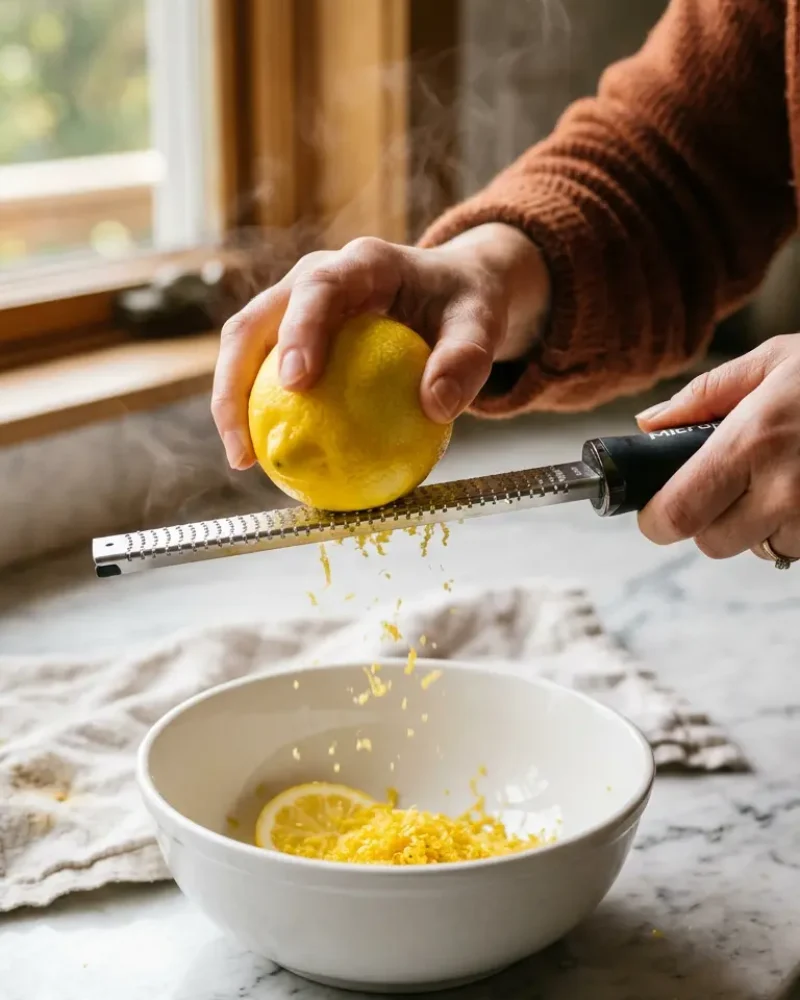
The lemon zest is everything here. I use a microplane grater because it captures all those fragrant oils without any of the bitter white pith underneath. Zest your lemons right before mixing so you get maximum flavor and that beautiful speckled appearance throughout the batter.
Find culinary lavender at specialty grocery stores or order online, and make absolutely sure it’s labeled for eating. Regular dried lavender from craft stores can be treated with chemicals. I steep mine gently in warm milk first to soften the flavor. If you can’t find it, you could try pairing your lemon cakes with a different glaze instead, like the one I use for my Strawberry Danish which also uses simple glazing techniques.
How to Make Elegant Mini Lemon Cakes with Lavender Glaze
The process is straightforward but pays attention to mixing technique. I creaming the butter and sugar first, then adding eggs slowly so everything emulsifies properly. The alternating method of adding dry and wet ingredients keeps gluten development minimal, which is why these stay so tender.
Step 1: Prepare and preheat your pans.
Heat your oven to 325°F (160°C). I use non-stick mini cake pans which are the easiest, but if you’re using regular metal, coat them thoroughly with baking spray and make sure you get into every corner. This is crucial since these little cakes can stick.
Lora’s Tip: Let your pans sit out while the oven preheats so they’re warm when you fill them. Warm batter in warm pans bakes more evenly.
Step 2: Mix your dry ingredients.
In a small bowl, whisk together the flour, salt, and baking soda. I like to whisk these three times to distribute the baking soda evenly so you don’t end up with little bitter pockets. Set this aside.
Step 3: Cream the butter and sugars.
In a stand mixer with the paddle attachment (or with a hand mixer and some elbow grease), beat the softened butter, granulated sugar, brown sugar, and lemon zest together on medium speed for about three minutes. You’re looking for a texture that’s light, fluffy, and pale. This is where you build the structure that keeps these cakes so tender. The lemon zest will perfume the entire bowl.
Lora’s Tip: Scrape down the sides of the bowl after each egg so everything stays incorporated. I use a spatula and do this three or four times even if it feels like overkill.
Step 4: Add eggs one at a time.
Add your first egg and beat on medium speed for about 30 seconds until it’s fully incorporated and the batter looks smooth. Then add the second egg and repeat. If your batter looks a little curdled at any point, don’t panic. Just add a tablespoon of your flour mixture and beat it in.
Step 5: Combine the wet ingredient mixture.
In another small bowl, whisk together your sour cream, milk, and vanilla. This is your liquid component that keeps the crumb tender.
Step 6: Alternate dry and wet ingredients.
Turn your mixer to low speed. Add a third of the flour mixture and beat just until combined. Then add half of the wet mixture and beat until combined. Continue with another third of flour, then the remaining wet mixture, then the final third of flour. The whole process should take about one minute total. Don’t overmix. I watch carefully and stop as soon as I don’t see streaks of flour anymore.
Lora’s Tip: Overmixing develops gluten, which makes dense cakes. Less mixing equals tender cakes, and in this recipe, that’s exactly what we want.
Step 7: Fill the pans evenly.
Divide the batter evenly among your prepared mini cake pans. I use a small ice cream scoop for this so each cake gets exactly the same amount. Fill each cup about three-quarters full. Tap the pans gently on the counter a couple of times to release any large air bubbles.
Step 8: Bake to golden perfection.
Bake at 325°F (160°C) for about 18 to 22 minutes, until the tops are golden and a toothpick inserted into the center comes out clean or with just a few crumbs. These mini cakes bake faster than a large cake because of their smaller size, so start checking around 18 minutes. You want them moist but fully cooked.
Lora’s Tip: Don’t open the oven door before 15 minutes has passed or you risk deflating them. After that, you can peek gently.
Step 9: Cool properly before glazing.
Remove the pans from the oven and let the cakes cool in their pans for about five minutes. Then turn them out onto a wire rack and let them cool completely. This takes about one hour at room temperature. I prepare the glaze while they’re cooling so it’s ready when they are.
Step 10: Make the lavender glaze.
Warm your milk gently on the stove until it’s steaming but not boiling, then add the culinary lavender and let it steep for three minutes. Strain out the lavender flowers and let the milk cool slightly. In a bowl, whisk together powdered sugar, salt, and vanilla. Then slowly add the lavender-infused milk and whisk until you get a smooth, pourable consistency. It should look like thick cream. If it’s too thick, add a tiny bit more milk. If it’s too thin, add a bit more powdered sugar.
Lora’s Tip: Don’t skip the straining step. Those little lavender buds look pretty but taste bitter if they sit in the glaze too long.
Step 11: Glaze and garnish.
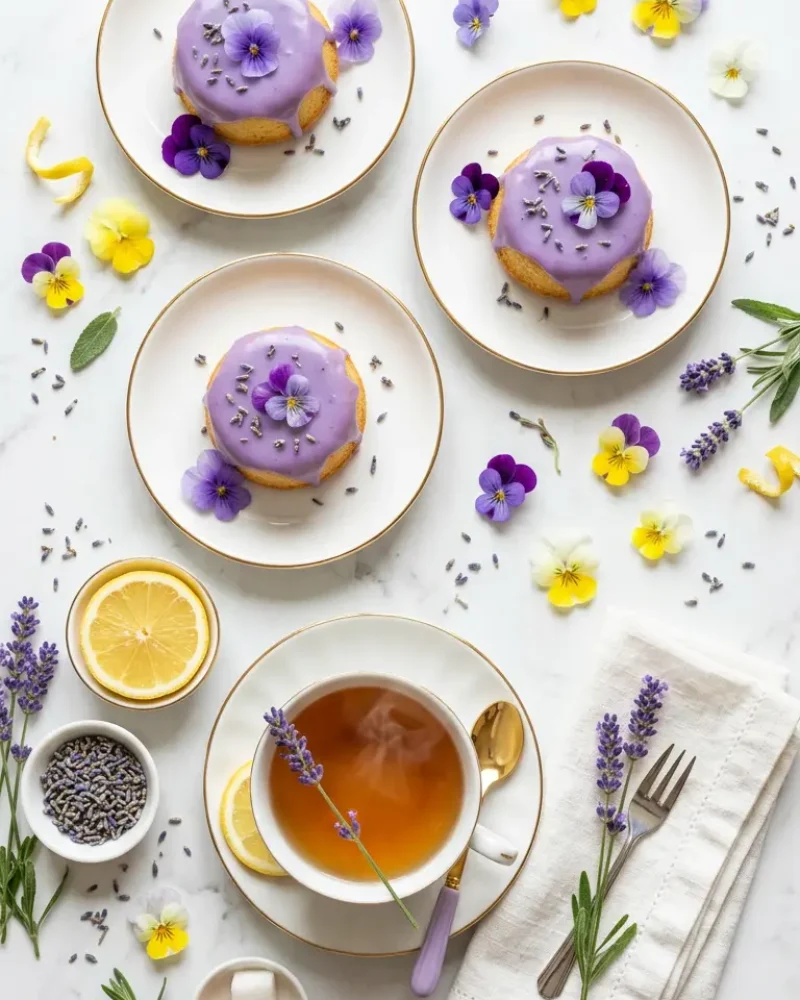
Dip the top of each cooled cake into the glaze so it coats the top and drips slightly down the sides. You want that elegant, slightly imperfect look. If you’re making these ahead, do this just before serving so the glaze stays glossy. Garnish with edible flowers or fresh lemon zest if you like. These look especially beautiful on small white plates with a cup of tea.
Variations and Substitutions
These little cakes are incredibly versatile once you understand the basic formula. I’ve played with lots of different flavor combinations depending on the season and what I’m in the mood for.
Lemon and thyme version: Substitute the lavender with fresh thyme leaves steeped in the glaze milk. It’s more herbaceous and pairs beautifully with a cup of tea.
Lemon and blueberry: Fold 1/2 cup fresh blueberries into the batter just before dividing it among the pans. Keep the lavender glaze exactly the same, or switch to a simple vanilla glaze. The tartness of the berries plays well with the lemon.
Lemon poppy seed: Add 2 tablespoons of poppy seeds to the dry ingredient mixture. Skip the lavender glaze and use a simple lemon glaze made with fresh lemon juice instead of milk.
Lavender honey version: Drizzle warm cakes with a small amount of local honey after glazing, and top with candied lavender buds for an extra elegant presentation.
What to Serve with Elegant Mini Lemon Cakes with Lavender Glaze
These are absolutely perfect for brunch, afternoon tea, or as an elegant dessert after a light dinner. I serve them on small white plates with fresh berries on the side and a cup of hot tea.
For a more substantial presentation, pair these with Honey Cinnamon Dessert for a complete tea service. You could also set them alongside fresh whipped cream and lemon curd if you want to let people customize their own plates.
Jake loves them with a cold glass of sparkling lemonade on a hot Austin afternoon. For something more elegant, try pairing them with champagne or a light white wine like Sauvignon Blanc. The lemon and floral notes complement each other beautifully.
Storage, Freezing, and Reheating
Frequently Asked Questions
Here are the questions I get asked most about this recipe:
Can I make these in a regular muffin tin instead of mini cake pans?
Yes, but baking time will increase to about 25 to 30 minutes. The texture will be slightly different because the ratio of surface area to interior changes, but they’ll still taste delicious. Start checking around 22 minutes with a toothpick.
Is there a substitute for sour cream?
You can use plain Greek yogurt at the same volume, though the flavor will be slightly tangier. You could also use buttermilk, but reduce the regular milk to 2 tablespoons since buttermilk is already liquid. Don’t substitute with regular yogurt as it’s too watery.
What if I don't have culinary lavender?
You have a few options. Make a simple vanilla glaze instead, or try steeping dried roses in the milk for a floral element without lavender. You could also just make a lemon glaze using fresh lemon juice instead of milk. The cake itself is still spectacular without the lavender.
How do I know if my cakes are done baking?
A toothpick inserted into the center should come out clean or with just a few moist crumbs, not wet batter. The tops should be golden brown and spring back slightly when you gently press with your finger. The sides should also pull away from the pan slightly.
Can I double this recipe?
Absolutely. Just double every ingredient and use two mini cake pans. You might need to bake them in two batches depending on your oven space. The timing should stay the same since you’re still making the same size individual cakes.
These mini lemon cakes feel special enough for a celebration but easy enough to make on a Tuesday afternoon when you need something pretty and delicious. They’re one of those recipes that reminds me why I love cooking, that moment when something simple becomes something memorable just because you paid attention and used good ingredients.
I really hope these become a favorite at your table too. Whether you’re serving them at a brunch, packing them in Lily’s lunchbox, or just treating yourself on a quiet afternoon, I promise they’ll make you smile.
With love and lemon zest,
Lora x