
I discovered mini egg cheesecakes completely by accident while searching for a springtime dessert that felt both indulgent and a little bit special. You know that moment when you’re browsing recipes at midnight and suddenly think, “Wait, why hasn’t anyone combined creamy cheesecake with the brightness of lemon and eggs?” That was me about two years ago, and I haven’t looked back since.
What I love most about these is how they look on a dessert table. They’re elegant without being fussy, individual without feeling fancy-pants, and honestly, they disappear from the plate faster than I can photograph them. Jake takes one bite and immediately asks if I’m making them for Easter, Mother’s Day, or any excuse to get them back on the menu. Lily even helps me crack the eggs now, which turns baking time into quality time with my six-year-old.
These mini cheesecakes have that perfect balance of tangy cream cheese, silky eggs, and a buttery graham cracker crust. They’re the kind of dessert that makes you feel like you’ve done something sophisticated in the kitchen, but they’re actually pretty forgiving to make.
💌 Love this one? There are 19 more.
I gathered the 20 most beloved recipes on Fresher Recipes into one free printable cookbook. These are the dishes readers tell me changed their weeknights. Pop in your email and it’s yours in seconds.
Instant download. Unsubscribe anytime.
Why You'll Love This Recipe
- Individual and elegant: Each mini cheesecake feels like a personal gift to whoever's eating it, without requiring a whole cake's worth of effort.
- Perfect texture: The custard-like center stays silky and creamy, never dense or heavy like a traditional cheesecake.
- Make-ahead friendly: I bake these the day before and keep them in the fridge, so I'm not stressed on entertaining day.
- Impressive presentation: People always assume you spent way more time than you actually did, and I'm absolutely here for that.
- Naturally egg-forward: These showcase eggs in a way that feels special and different from a basic dessert, making them perfect for spring menus.
Ingredients You'll Need
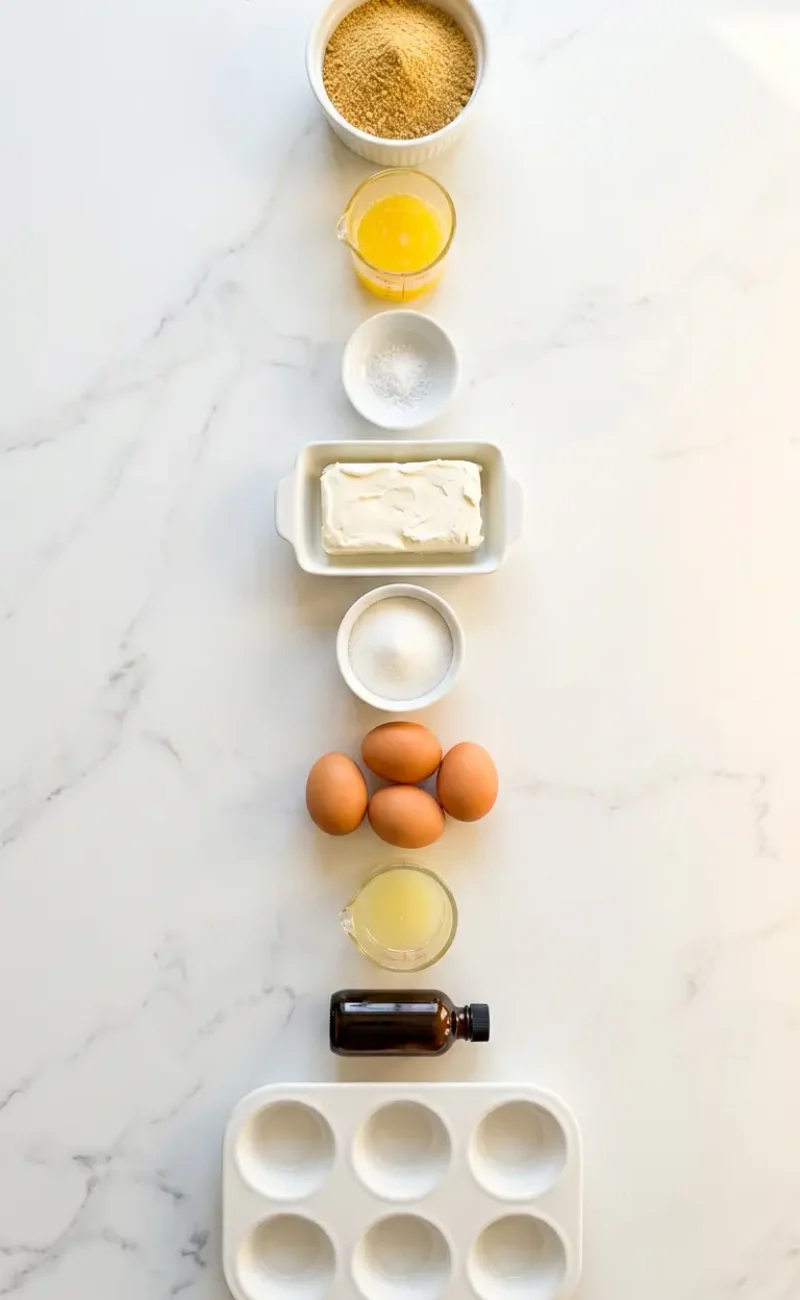
The ingredient list is short and straightforward, which is honestly one of my favorite things about this recipe. You’re working with quality staples you probably already have, plus a few pantry essentials. The beauty here is that you don’t need anything exotic, just good cream cheese and eggs that you treat with care.
- 120g (1 cup) graham cracker crumbs, which form the buttery foundation for each mini cheesecake. I crush the crackers with my hands in a bowl, then mix them with melted butter and a pinch of salt.
- 60ml (1/4 cup) melted butter, binding the crumbs into a press-in crust that stays intact with every bite.
- 200g (7 oz) cream cheese, softened, the backbone of creamy texture. I always let it sit on the counter for 30 minutes so it blends smoothly without lumps.
- 100g (1/2 cup) granulated sugar, sweetening the filling just enough without overpowering the eggs’ delicate flavor.
- 3 large eggs, creating that signature custard-like texture that makes these different from dense baked cheesecakes.
- 30ml (2 tablespoons) fresh lemon juice, adding brightness and preventing the filling from feeling too heavy.
- 5ml (1 teaspoon) vanilla extract, deepening the flavor without making it obvious where it’s coming from.
- Pinch of sea salt, balancing sweetness and making every flavor pop.
Room-temperature cream cheese is your secret weapon. I learned this the hard way after making lumpy cheesecake filling at 11pm before guests arrived. Letting it sit out for 30 minutes transforms it into something that blends smoothly with the eggs, creating that silky texture we’re after.
Fresh lemon juice makes all the difference. I always squeeze it fresh rather than using bottled, and it’s worth the extra 30 seconds. The acidity brightens everything and keeps the filling from tasting one-note sweet. If you’re making these for a springtime dessert table, consider adding a lemon zest topping or serving them alongside Mini Lemon Cakes with Lavender Glaze for a coordinated theme.
Don’t skip the salt. I know it sounds small, but that tiny pinch of sea salt in the filling actually makes the eggs and lemon flavor shine brighter. It’s the ingredient nobody notices but everyone tastes.
Note: Use room-temperature eggs and cream cheese for the smoothest, most custard-like filling. Cold ingredients won't blend properly and can create lumps or uneven baking.
How to Make Mini Egg Cheesecakes
The process is more straightforward than you might think. We’re building layer by layer, starting with the crust, then filling, then baking low and slow. The key is patience with the water bath, which keeps the filling creamy rather than cracked or rubbery.
Step 1: Prepare the crusts.
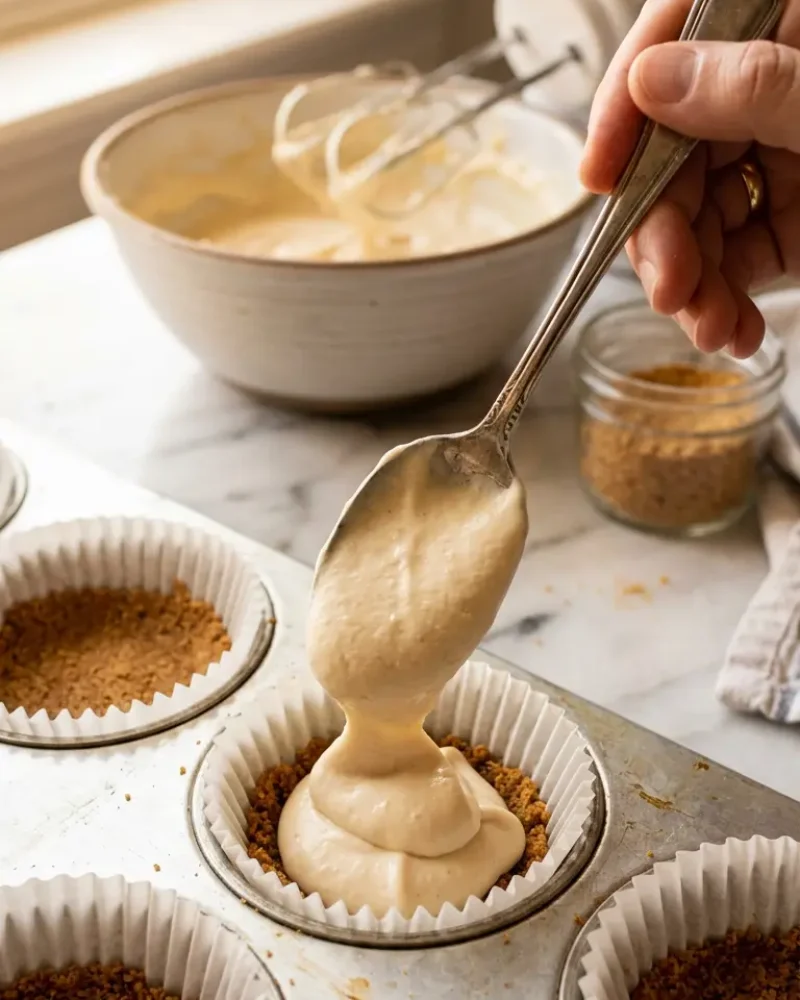
Preheat your oven to 160°C (325°F). Line a muffin tin with paper liners or grease each cup well. In a small bowl, mix together 120g (1 cup) graham cracker crumbs with 60ml (1/4 cup) melted butter and a pinch of salt until the mixture looks like wet sand. Divide evenly among the muffin cups, pressing gently to create an even base. Bake for 8 to 10 minutes until lightly golden and set, then remove and let cool slightly while you prepare the filling.
Lora’s Tip: I use a measuring tablespoon to pack the crust down evenly. It takes two extra minutes but creates a uniform base that holds the filling perfectly.
Step 2: Blend the filling.
In a large bowl, beat 200g (7 oz) softened cream cheese with 100g (1/2 cup) granulated sugar until smooth and creamy, about 2 to 3 minutes. Scrape down the bowl to catch any lumps hiding along the sides. Add 3 large room-temperature eggs one at a time, beating well after each addition. Pour in 30ml (2 tablespoons) fresh lemon juice, 5ml (1 teaspoon) vanilla extract, and a pinch of sea salt, then mix gently until just combined.
Lora’s Tip: Don’t overmix once the eggs are in, or you’ll incorporate too much air and create cracks on top during baking. Gentle is better here.
Step 3: Fill and set up the water bath.
Divide the filling evenly among the prepared crusts, filling each cup about three-quarters full. Place the muffin tin in a larger roasting pan. Pour boiling water into the roasting pan until it reaches halfway up the sides of the muffin cups, creating a water bath. This gentle heat keeps the custard creamy and prevents the tops from cracking.
Lora’s Tip: I use a small measuring cup to pour the water carefully, standing at the oven so I don’t have to carry a hot pan. It’s safer and less spill-prone.
Step 4: Bake with patience.
Bake in the water bath for 20 to 25 minutes. The centers should still jiggle slightly when you gently shake the pan, just like a good custard should. The edges will set but the centers will appear almost underdone. This is exactly right. Remove the muffin tin from the water bath carefully and let cool for 15 minutes on the counter.
Lora’s Tip: Overbaking is the enemy here. Those jiggly centers will continue to set as they cool, resulting in creamy cheesecakes instead of dry, rubbery ones. I set a timer and check at 20 minutes without fail.
Step 5: Chill and serve.
Transfer the mini cheesecakes to the refrigerator for at least 4 hours, though overnight is ideal. This resting time lets the flavors settle and the texture become perfectly creamy. Run a thin knife around the edges before removing from the tin to prevent sticking. Serve chilled, optionally topped with fresh berries, lemon zest, or a drizzle of honey. Try pairing these with Strawberry Crunch Cheesecake Tacos if you’re serving them at a dessert party and want to offer different textures.
Lora’s Tip: I store mine in the fridge in a covered container and actually find they taste even better on day two, when all the flavors have melded together.
Lora's Kitchen Tips
- Water bath is non-negotiable. It might feel like an extra step, but this gentle, moist heat is what prevents the filling from cracking and keeps it custard-like rather than dense. I've tested both with and without, and with always wins.
- Room temperature is everything. Eggs and cream cheese that are too cold won't blend smoothly, and they'll bake unevenly. I set mine out 30 to 45 minutes before mixing.
- Don't overbake. Jiggle the pan gently at 20 minutes. If the centers still move slightly, that's perfect. They continue cooking as they cool, and that residual heat creates that silky texture we want.
- Paper liners are your friend. They make removing the cheesecakes effortless and keep the muffin tin clean. I buy the natural parchment ones, which peel away easily without sticking.
- Overnight chilling is ideal. While four hours works, I always make these the day before I serve them. The flavor and texture improve as they sit, and I'm not stressed about timing on party day.
Variations and Substitutions
Once you master the basic recipe, the variations are endless. This is where you can get creative and make them fit your occasion or mood.
Lemon Blueberry Version: Top each mini cheesecake with fresh blueberries and a sprinkle of lemon zest before serving. The tartness of the berries complements the lemon filling beautifully.
Berry Swirl: Spoon a small dollop of berry coulis onto the filling before baking, then swirl gently with a toothpick. Raspberry or strawberry both work wonderfully.
Espresso Mini Cheesecakes: Add 10ml (2 teaspoons) of instant espresso powder dissolved in the lemon juice. The coffee deepens the filling’s flavor without making it taste explicitly like coffee.
Honey-Lavender Version: Replace 30ml (2 tablespoons) of the sugar with honey, and add 2ml (1/2 teaspoon) of dried culinary lavender. It’s subtle, floral, and absolutely elegant for spring entertaining.
Brown Butter Crust: Brown your butter before mixing it with the graham crackers for a deeper, nuttier flavor. This takes just five extra minutes and completely changes the flavor profile.
What to Serve with Mini Egg Cheesecakes
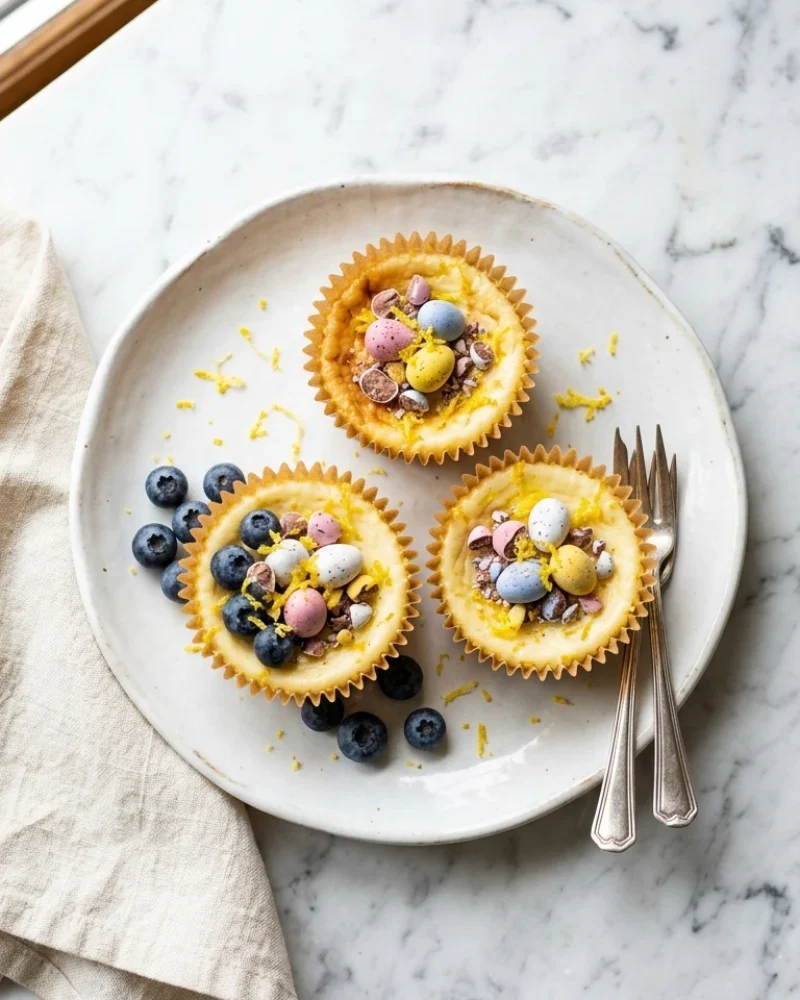
These mini cheesecakes are fancy enough for any occasion, but they don’t need much to shine. I usually serve them chilled, straight from the fridge, with nothing more than maybe a lemon zest garnish or a few fresh berries alongside.
If I’m serving them at a dinner party, I’ll add a small dollop of whipped cream and a sprig of fresh mint for color. They pair beautifully with warm tea or coffee in spring, or a crisp white wine if you’re doing an evening gathering. I love serving them alongside Peach Cobbler Cheesecake for a dessert spread that showcases different cheesecake styles. For a lighter finish to Easter dinner, these are perfect because they’re individual, not overwhelmingly heavy, and feel celebratory without being fussy.
I also like setting them out on a pretty serving board with small forks and small napkins, letting guests grab them as they mingle. There’s something about individual desserts that makes entertaining feel less formal and more welcoming.
Storage, Freezing, and Reheating
- Storage: Keep mini cheesecakes in an airtight container in the refrigerator for up to five days. I always store them in the fridge rather than the counter, as the cream cheese filling doesn't do well at room temperature.
- Freezing: These freeze beautifully for up to three months. I remove them from the muffin tin, wrap each one individually in plastic wrap, then place them in a freezer bag. They thaw slowly in the fridge overnight without any loss of texture.
- Thawing: Move frozen mini cheesecakes to the refrigerator the night before you plan to serve them. Slow thawing keeps the filling creamy and prevents any weeping or separation. Never thaw at room temperature.
- Reheating: These are best served chilled straight from the fridge. If you prefer them slightly less cold, let them sit on the counter for 10 to 15 minutes before serving, but don't reheat them in the oven.
- Make-ahead tip: I bake these the day before I serve them, which is my favorite approach. The flavors meld overnight, the texture becomes even creamier, and I have zero stress on entertaining day.
Frequently Asked Questions
Here are the questions I get asked most about this recipe:
Can I make these without a water bath?
Technically yes, but I wouldn’t recommend it. The water bath keeps the filling creamy by providing gentle, even heat. Without it, you risk the edges setting too fast while the centers overcook, resulting in cracks on top and a less silky texture. If you truly can’t do a water bath, reduce the oven temperature to 150°C (300°F) and keep a close eye on them starting at 18 minutes.
Why did my cheesecake crack on top?
Cracks usually mean the filling overbaked or baked at too high a temperature. The centers should still jiggle slightly at 20 minutes, like a good custard. I also recommend using a water bath without fail, as it prevents the tops from setting too quickly and cracking. Overmixing the filling after adding eggs can also incorporate too much air, which causes cracks during baking.
Can I use bottled lemon juice instead of fresh?
You can, but I really don’t recommend it. Bottled lemon juice tastes flat and chemical-y compared to fresh, and since lemon is such a key flavor here, it makes a noticeable difference. Fresh lemon juice takes maybe 30 seconds extra and transforms the filling’s brightness. If you’re in a pinch, use bottled, but try fresh next time and taste the difference.
How do I know when they're done baking?
Gently shake the muffin tin at 20 minutes. The edges should be set and slightly firm, but the centers should still jiggle a little bit, like barely set custard. That slight jiggle is exactly right. They’ll continue to cook as they cool on the counter, and then set completely in the fridge. If the centers are completely firm, you’ve overbaked them.
Can I make these in a different tin, like a cupcake liner?
Yes, absolutely. Any muffin-sized vessel works, whether that’s a traditional muffin tin, silicone muffin cups, or even small oven-safe ramekins. The baking time might vary slightly if your cups are a different size, so just check at 18 minutes and adjust from there. Smaller cups will bake faster, larger cups will take longer.
I really hope mini egg cheesecakes become your new spring tradition, the way they’ve become ours. There’s something magical about bringing a tray of these to a dinner table and watching everyone’s face light up. They’re elegant enough to impress, simple enough that you’re not stressed, and honestly, they taste like you spent way more time than you actually did.
Jake asks for them for every occasion now, and I’ve already promised Lily that we’re making them together for her class Easter party next year. These little cheesecakes have become part of our family’s story in the sweetest way, and I hope they become part of yours too.
With love and lemon,
Lora x
Mini Egg Cheesecakes
12
servings20
minutes25
minutes285
kcalIngredients
120g (1 cup) graham cracker crumbs
60ml (1/4 cup) melted butter
Pinch of sea salt
200g (7 oz) cream cheese, softened
100g (1/2 cup) granulated sugar
3 large eggs, room temperature
30ml (2 tablespoons) fresh lemon juice
5ml (1 teaspoon) vanilla extract
Pinch of sea salt
Directions
Preheat oven to 160°C (325°F). Line a muffin tin with paper liners. Mix graham cracker crumbs with melted butter and salt. Divide among muffin cups and press gently. Bake for 8 to 10 minutes until lightly golden.
While crusts bake, beat softened cream cheese with sugar until smooth. Add eggs one at a time, beating after each. Mix in lemon juice, vanilla extract, and salt gently until combined.
Divide filling among cooled crusts. Place muffin tin in a larger roasting pan. Pour boiling water into roasting pan until it reaches halfway up the sides of the muffin cups.
Bake in the water bath for 20 to 25 minutes. Centers should jiggle slightly when the pan is gently shaken. Remove from water bath and cool for 15 minutes on the counter.
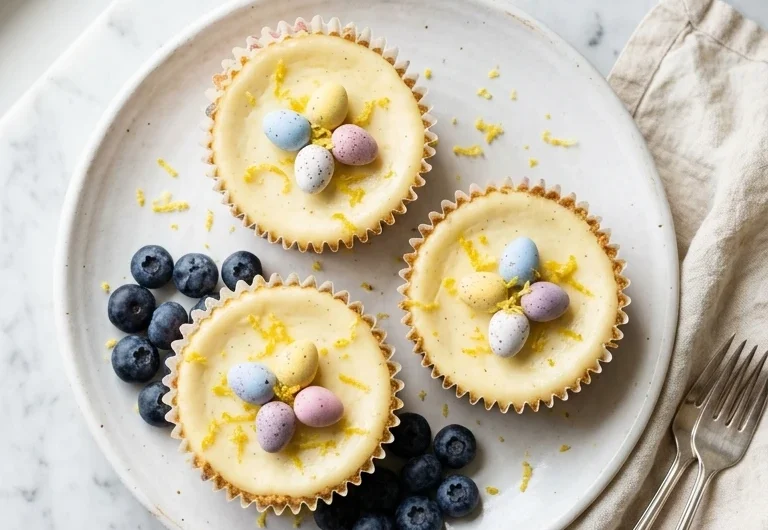
Transfer to refrigerator for at least 4 hours, preferably overnight. Run a thin knife around the edges before removing from the tin. Serve chilled, optionally topped with berries or lemon zest.
🛒 My Kitchen Essentials for Easy Dinners
These are the tools I reach for again and again — a few tried-and-true favorites that make these recipes faster and easier to cook.
As an Amazon Associate, I earn from qualifying purchases — at no extra cost to you.