
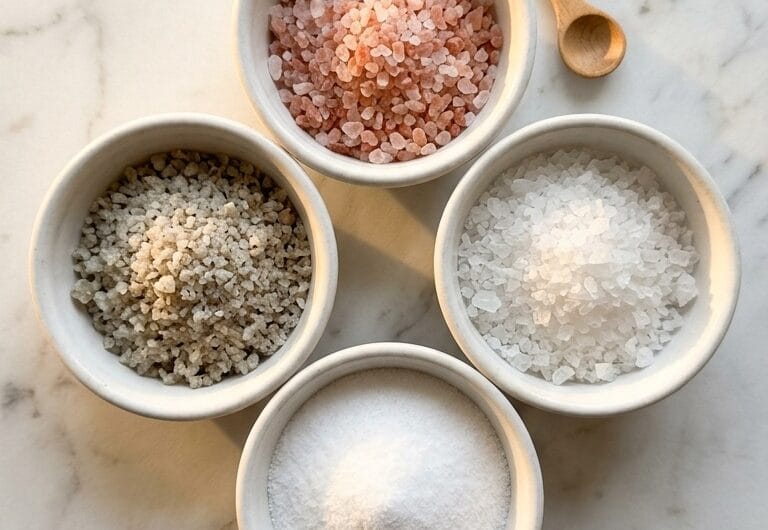
Noah knocked over the salt shaker at dinner last week and as I was cleaning up the mess, Lily asked me why we have “so many different salts” in the kitchen. She had a point. I counted four: fine table salt for baking, coarse sea salt for finishing, a big jar of Himalayan pink salt for my morning drink, and a bag of Celtic grey salt that Jake bought on impulse from the farmers market.
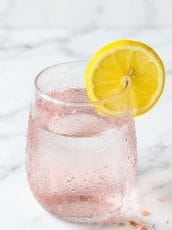
If you have ever stood in the grocery aisle wondering what the actual difference is between pink salt vs sea salt vs table salt, you are not alone. The internet makes it sound like Himalayan pink salt is a superfood and table salt is poison. The truth is more nuanced than that. I broke down the real differences so you can stop guessing and start choosing the right salt for the right job. If you are specifically looking for the wellness drink that started my salt obsession, check out my pink salt trick recipe.
Why This Comparison Matters
- Effortless and Fast: This entire pink salt trick recipe comes together in under two minutes with zero cooking required. All you need is a glass, a spoon, and three ingredients you probably already have in your kitchen.
- Proven Hydration Support: Himalayan pink salt contains trace minerals that help your body absorb and retain water more effectively than plain water alone. I noticed less mid-morning fatigue within just a few days of drinking this consistently.
- Digestion-Friendly: The combination of warm water and fresh lemon juice gently wakes up your digestive system first thing in the morning. My bloating noticeably reduced during the first week I made this part of my routine.
- Fasting Safe: This version of the pink salt trick recipe uses no sweeteners or calories in its base form, which means it works perfectly for intermittent fasting windows. It gives your body what it needs without breaking your fast.
- Beginner-Friendly: There is absolutely nothing to mess up here. If you can stir a glass of water, you can make this recipe. I have even let Lily pour in the lemon juice and she loves feeling helpful in the morning.
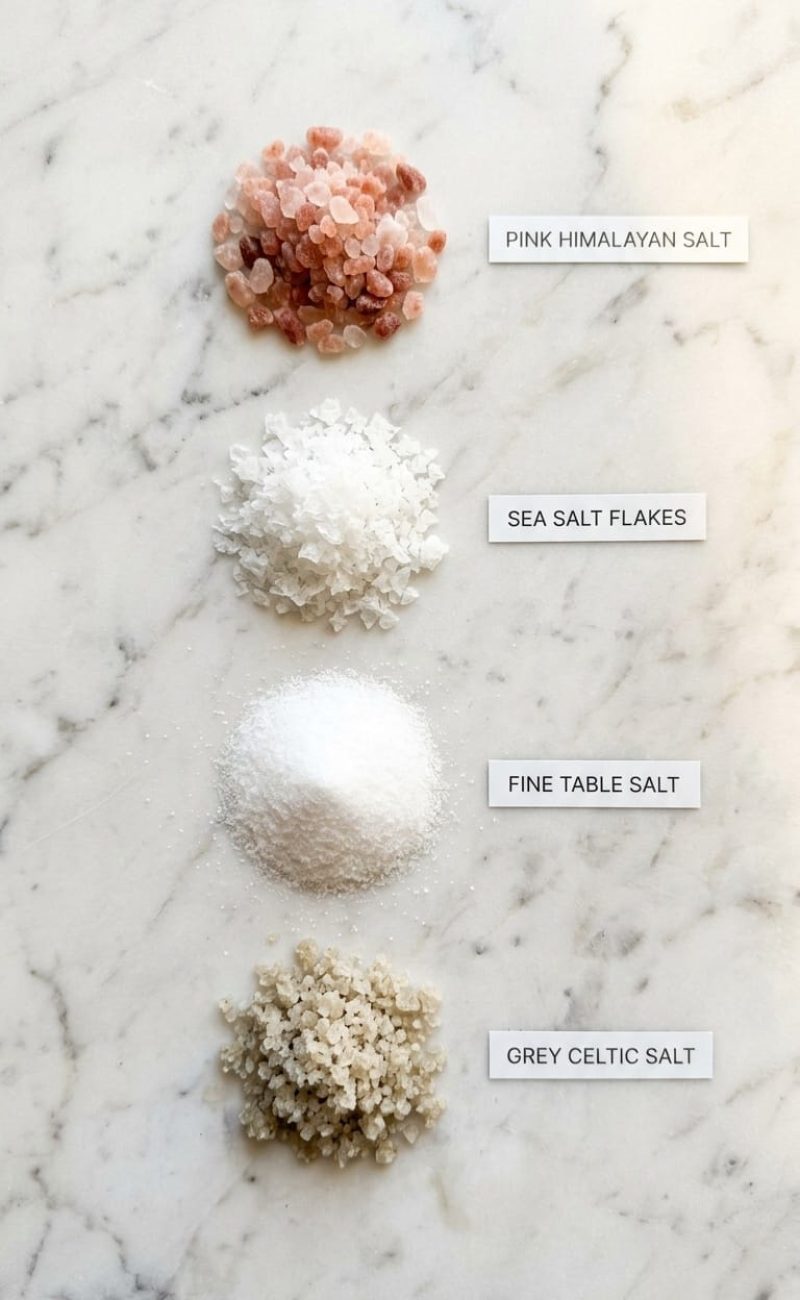
Pink Salt vs Sea Salt vs Table Salt: Complete Comparison
Here is the full side-by-side breakdown of the four most common salt types you will find in stores. I compared them across the factors that actually matter for home cooking and wellness.
| Feature | Himalayan Pink Salt | Sea Salt | Table Salt | Celtic Grey Salt |
|---|---|---|---|---|
| Source | Mined from ancient deposits in Pakistan (Khewra Salt Mine) | Evaporated from ocean or sea water | Mined from underground deposits, then heavily refined | Hand-harvested from coastal clay-lined ponds in France |
| Processing | Minimal. Crushed and washed only | Varies. Some brands are heavily refined, others are raw | Heavily refined. Bleached, stripped of minerals, anti-caking agents added | Minimal. Air-dried, retains natural moisture |
| Trace Minerals | 80+ (iron, magnesium, potassium, calcium) | Varies by source. Some minerals, less consistent | Almost none. Iodine often added back artificially | Rich in magnesium. Retains natural moisture and minerals |
| Sodium per 1/4 tsp | ~575 mg | ~560-590 mg (varies) | ~590 mg | ~460 mg (lower due to moisture) |
| Flavor | Mild, clean, slightly mineral | Briny, slightly complex | Sharp, metallic, one-dimensional | Earthy, mellow, slightly damp |
| Texture | Coarse or fine available. Crunchy as finishing salt | Flaky, coarse, or fine depending on brand | Very fine, dissolves instantly | Moist, chunky, sticky |
| Best For | Morning wellness drinks, finishing, general cooking | Finishing, seasoning, cooking | Baking (precise measurements), boiling water | Finishing, cooking, mineral supplementation |
| Price (approx) | $5-8 per pound | $3-12 per pound (huge range) | $1-2 per pound | $8-15 per pound |
Himalayan Pink Salt: What Makes It Different
Himalayan pink salt is mined from the Khewra Salt Mine in Pakistan, one of the oldest and largest salt mines in the world. The pink color comes from trace iron oxide, and the salt contains over 80 trace minerals including magnesium, potassium, and calcium. According to a Healthline review of Himalayan salt research, these minerals are present in very small amounts and should not be considered a meaningful dietary supplement on their own.
I want to be upfront about something: the mineral amounts are tiny. You would need to eat an unrealistic amount of this salt to get meaningful nutritional benefit from the trace minerals alone. The real advantage is that it is minimally processed, has a milder flavor than table salt, and dissolves beautifully in warm water for morning wellness drinks like my pink salt trick recipe.
I use fine-ground Himalayan salt for my morning drink and coarse crystals as a finishing salt on roasted vegetables and grilled chicken. The crunch factor on a piece of parmesan crusted chicken fresh out of the oven is incredible.
Sea Salt: The Versatile Middle Ground
Sea salt is produced by evaporating ocean water or water from saltwater lakes. The quality varies enormously by brand and source. Some sea salts are heavily refined and barely different from table salt. Others, like Maldon or Fleur de Sel, are minimally processed and have a beautiful flaky texture.
Sea salt is my go-to for everyday cooking because it falls right in the middle of everything: middle price, middle flavor complexity, middle processing level. When I make a quick one pot creamy garlic pasta, I reach for sea salt every time because it dissolves well and adds a subtle briny depth that regular refined salt just cannot match.
One concern with sea salt: because it comes from the ocean, it can contain microplastics. A study published in Environmental Science and Technology found microplastic particles in over 90% of commercial sea salt brands tested worldwide. This is not a reason to panic, but it is worth knowing if you are choosing between sea salt and a mined salt like Himalayan.
Table Salt: When It Actually Makes Sense
Table salt gets a bad reputation in wellness circles, but it has one genuine advantage: iodine. Most table salt in the US is fortified with iodine, a mineral essential for thyroid function. According to the World Health Organization, iodine deficiency remains one of the most common nutritional deficiencies globally, and iodized salt is the primary prevention strategy. If you exclusively use Himalayan salt or sea salt and do not eat much seafood or dairy, you could develop an iodine deficiency over time.
Table salt is also the best choice for baking because its ultra-fine, uniform grain size gives you the most consistent measurements. When a recipe calls for “1 teaspoon of salt,” it was almost certainly developed with fine table salt in mind. Using coarse Himalayan crystals in the same measurement would give you less sodium by volume because the larger crystals have more air space between them.
I keep a small container of iodized table salt specifically for baking and for Lily and Noah’s food, since kids need iodine for brain development and they are not exactly fans of my salt water morning drink yet.
Celtic Grey Salt: The Premium Option
Celtic grey salt (also called sel gris) is hand-harvested from clay-lined coastal ponds in Brittany, France. It retains natural moisture which gives it a distinctive damp, chunky texture and a lower sodium content per teaspoon than other salts.
It is the most expensive option on this list and I use it sparingly as a finishing salt. A pinch on top of dark chocolate, avocado toast, or a fresh tomato salad is where Celtic salt really shines. Jake brought a bag home from the farmers market six months ago and I was skeptical, but the earthy, mellow flavor won me over immediately.
For the pink salt trick recipe specifically, Celtic grey salt works as a substitute but it dissolves slower because of the moisture content. Stick with fine-ground pink salt for drinks.
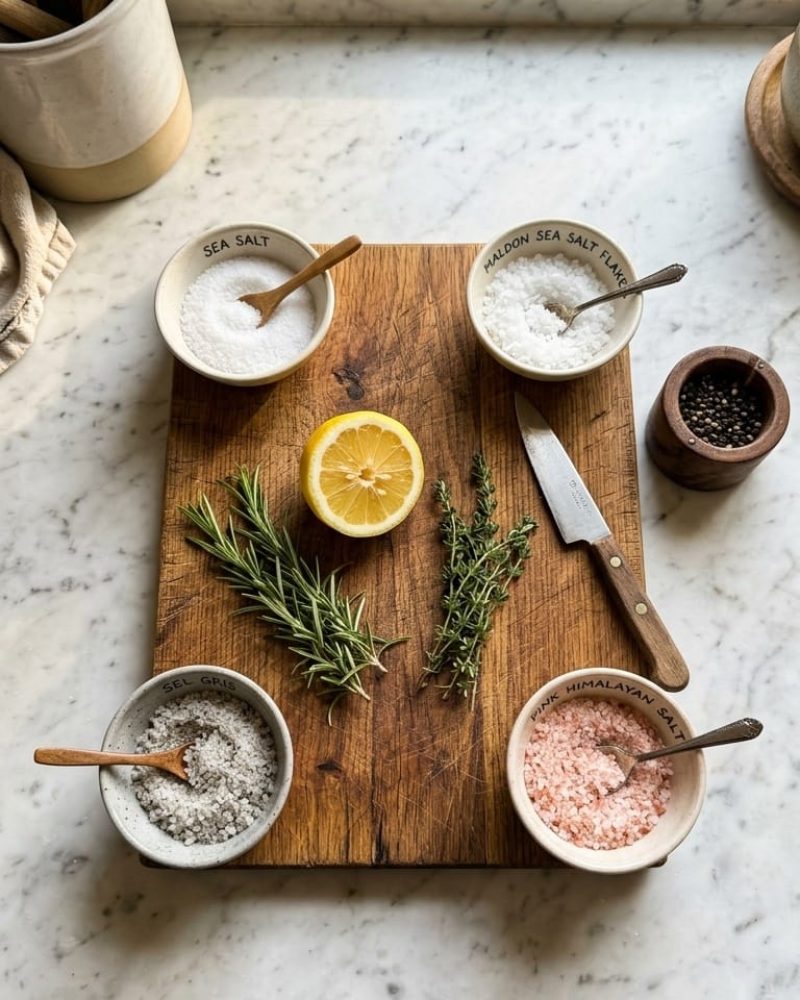
Lora's Salt Tips
- Effortless and Fast: This entire pink salt trick recipe comes together in under two minutes with zero cooking required. All you need is a glass, a spoon, and three ingredients you probably already have in your kitchen.
- Proven Hydration Support: Himalayan pink salt contains trace minerals that help your body absorb and retain water more effectively than plain water alone. I noticed less mid-morning fatigue within just a few days of drinking this consistently.
- Digestion-Friendly: The combination of warm water and fresh lemon juice gently wakes up your digestive system first thing in the morning. My bloating noticeably reduced during the first week I made this part of my routine.
- Fasting Safe: This version of the pink salt trick recipe uses no sweeteners or calories in its base form, which means it works perfectly for intermittent fasting windows. It gives your body what it needs without breaking your fast.
- Beginner-Friendly: There is absolutely nothing to mess up here. If you can stir a glass of water, you can make this recipe. I have even let Lily pour in the lemon juice and she loves feeling helpful in the morning.
Which Salt Should You Use When?
After testing all four types in my kitchen for weeks, here is my practical recommendation:
Morning wellness drinks: Fine-ground Himalayan salt. Every time. It dissolves cleanly, has a mild flavor, and the trace minerals are a bonus. See my full pink salt trick recipe for the exact method.
Everyday cooking (soups, sauces, pasta water): Sea salt or Himalayan salt. Both work well. I keep a bowl of coarse sea salt next to my stove and pinch from it constantly.
Baking: Fine table salt. The uniform grain size gives consistent measurements and the iodine is a health bonus.
Finishing (on top of cooked food): Coarse Himalayan crystals, flaky sea salt (Maldon), or Celtic grey salt. This is where texture and visual appeal matter most. A few crystals on top of my garlic steak bites and potatoes make the whole plate look restaurant-quality.
Intermittent fasting: Fine-ground Himalayan salt in warm water. Zero calories, gentle on an empty stomach, supports electrolyte balance. I cover this in detail in my does pink salt break a fast article.
Common Myths About Salt Types
There is a lot of misinformation online about salt, especially Himalayan salt. Let me clear up the biggest myths:
Myth: Himalayan salt has enough minerals to replace supplements. Reality: The trace mineral amounts are extremely small. You would need to consume a dangerous amount of sodium to get meaningful magnesium or potassium from salt alone. It is a slightly better salt, not a multivitamin.
Myth: Table salt is toxic. Reality: Table salt is sodium chloride, the same base chemical as every other salt. It is more processed and contains anti-caking agents, but calling it toxic is an exaggeration. The iodine added to table salt actually prevents thyroid disease.
Myth: Sea salt is healthier than table salt. Reality: Most sea salt has similar sodium content to table salt. The main differences are flavor, texture, and minimal trace minerals. Neither is dramatically healthier than the other.
Myth: Himalayan salt promotes weight loss. Reality: No salt, regardless of color, burns fat. Salt water may support hydration and reduce bloating, which can make you feel lighter, but it does not cause fat loss. I cover this honestly in my pink salt trick recipe article.
Frequently Asked Questions
Here are the most common questions people ask about different salt types:
Is pink Himalayan salt better than regular table salt?
Pink salt is less processed and contains trace minerals that table salt lacks. However, the sodium content is nearly identical and the mineral differences are nutritionally small. Pink salt has a milder flavor that many people prefer. Table salt has the advantage of containing iodine which is essential for thyroid health. Neither is dramatically better overall. Use both for different purposes.
Can I use sea salt instead of pink salt for the pink salt trick recipe?
Yes, sea salt works as a substitute. Choose a fine-ground, unrefined sea salt for best results. The taste will be slightly more briny than pink salt but the electrolyte benefits are similar. Avoid heavily refined sea salts that are essentially the same as table salt. For the smoothest flavor in a morning drink, fine-ground Himalayan pink salt remains my first choice.
Does the type of salt matter for cooking?
Yes, significantly. Grain size affects how quickly salt dissolves and how evenly it distributes. Fine table salt is best for baking and sauces. Coarse salt is best for finishing and seasoning meats before cooking. Flaky salt is best for garnishing. Using the wrong type can easily lead to over-salting or under-salting a dish.
Is Celtic grey salt worth the price?
For everyday cooking, probably not. It is 3-5 times more expensive than sea salt with similar culinary performance. Where Celtic grey salt shines is as a finishing salt on dishes where you can taste and feel its unique moist, chunky texture. If you are on a budget, stick with Himalayan pink salt for drinks and sea salt for cooking.
How much sodium is too much per day?
The American Heart Association recommends no more than 2,300mg of sodium per day for most adults, with an ideal limit of 1,500mg for those with high blood pressure. One quarter teaspoon of Himalayan salt contains about 575mg. If you drink the pink salt trick recipe every morning, that accounts for roughly 25-38% of your daily limit before you eat anything. Be mindful of sodium in the rest of your meals throughout the day.
The honest answer to the pink salt vs sea salt vs table salt debate is that you probably need all of them. Each one has a role in the kitchen and no single salt does everything perfectly. Pink salt for morning drinks and finishing. Sea salt for everyday cooking. Table salt for baking and iodine. And if you want to treat yourself, a bag of Celtic grey salt for those special finishing moments. Now you know exactly which one to reach for and why.
With love and way too many salt bowls on my counter,
Lora x


![Pink Salt vs Sea Salt vs Table Salt [Honest Comparison]](https://fresherrecipes.com/wp-content/uploads/2026/03/pink-salt-vs-sea-salt-vs-table-salt-hero-172x230.jpeg)
![Pink Salt Trick Recipe — Tested for 2 Weeks [Honest Review]](https://fresherrecipes.com/wp-content/uploads/2026/03/Pink-Salt-Trick-Recipe-172x230.webp)